

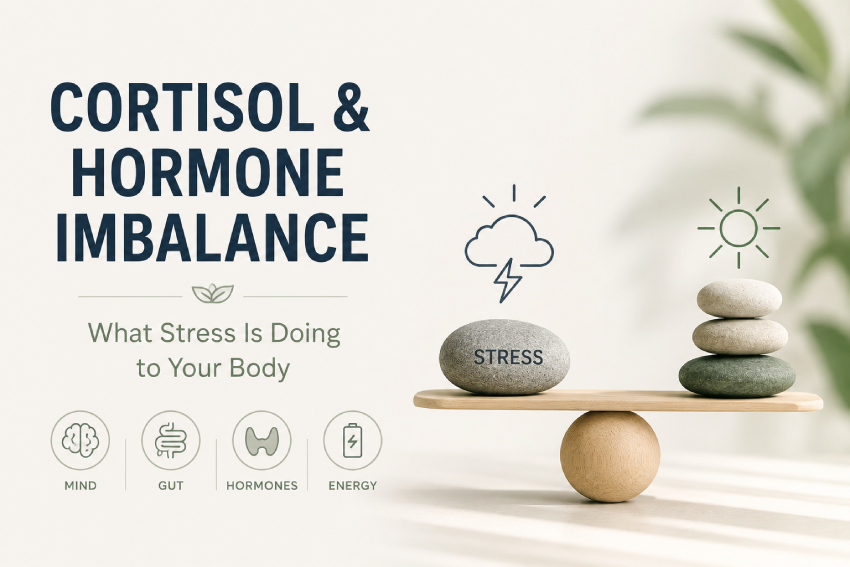
Cortisol and hormone imbalance occur when chronic stress causes your adrenal glands to overproduce or dysregulate cortisol, triggering a cascade that disrupts thyroid function, sex hormones, blood sugar, gut health, and energy levels. Common symptoms include fatigue, brain fog, belly fat, digestive issues, mood swings, and poor sleep. At North Academy Chiropractic, aligned with The Wellness Way philosophy, we don’t just treat the symptoms; we identify the root stressors driving the imbalance and create a plan to restore your body’s natural function.
What Is Cortisol?
Your adrenal glands produce cortisol, which is often called the “stress hormone.” But cortisol itself isn’t the villain; it’s essential. It helps regulate blood sugar balance, manage inflammation, produce energy, support your immune response, drive metabolism, and maintain your natural wake/sleep rhythm.
The problem isn’t cortisol. The problem is what happens when stress becomes chronic, and cortisol becomes dysregulated. That’s when the cascade begins.
How Chronic Stress and Hormones Are Connected
When stress stays elevated, the body shifts its priorities. Survival takes precedence over healing, reproduction, and recovery, creating a ripple effect across your entire endocrine system. If you have been experiencing symptoms you can’t explain, cortisol and hormone imbalance may be the missing piece, the key to understanding why so many seemingly unrelated symptoms share the same root cause.
Stress and Thyroid Function
One of the first systems to suffer under chronic stress is the thyroid. Persistent cortisol elevation can interfere with healthy thyroid function, slowing it down in ways that affect your whole body. The link between stress and thyroid function explains symptoms like fatigue, brain fog, unexplained weight gain, feeling cold all the time, and dry skin, which are often treated in isolation when the real driver is cortisol dysregulation.
Sex Hormones and Cortisol
Chronic stress can also impact estrogen, progesterone, and testosterone. When the body is locked in survival mode, sex hormones are deprioritized. This may contribute to PMS, irregular cycles, fertility struggles, low libido, mood swings, and poor recovery from exercise.
The Blood Sugar and Cortisol Connection
Elevated cortisol raises blood sugar and worsens insulin resistance, a pattern that often goes undetected until symptoms become impossible to ignore. The blood sugar and cortisol connection explains why chronically stressed people frequently accumulate stress belly fat, experience intense cravings, suffer afternoon energy crashes, and struggle to lose weight despite eating well and exercising regularly.
How Stress and Gut Health Are Linked
Your digestive system is one of the most sensitive barometers of stress in the body. When your nervous system shifts into fight-or-flight mode, digestion becomes a lower priority. Understanding how stress and gut health are connected helps explain why so many people experience digestive issues during stressful periods. Cortisol directly affects digestion at multiple levels.
Chronic stress can lead to lower stomach acid, bloating after meals, constipation or diarrhea, IBS-like symptoms, and changes in gut bacteria. The connection between stress and leaky gut is particularly significant when the gut lining becomes compromised, undigested particles can enter the bloodstream, triggering immune responses and driving inflammation throughout the body. Many people chasing gut symptoms are actually dealing with hidden stress physiology.
Chronic Stress and Fatigue: Why Your Energy Has Disappeared
Many people assume they need more caffeine when what they actually need is better stress recovery. The relationship between chronic stress and fatigue is one of the most overlooked drivers of low energy, one that no amount of coffee can fix.
Stress drains your energy by disrupting sleep quality, burning through nutrients faster than your body can replenish them, increasing systemic inflammation, driving blood sugar highs and crashes, overworking the adrenal system, and reducing the production of restorative hormones. Cortisol and low energy go hand in hand, and the longer the stress continues, the deeper the depletion.
The result is a feeling many patients describe perfectly: tired but wired. Exhausted, yet unable to fully relax or switch off. If this sounds familiar, stress physiology, not laziness or age, may be what’s standing between you and your energy.
Hidden Stressors You Might Not Know About
Stress is not only emotional. Your body responds to a much wider range of stressors than most people realize. At The Wellness Way, identifying hidden stressors is central to how we approach whole-body health because your body may also be perceiving stress from:
- Food allergies and sensitivities
- Chronic infections
- Gut imbalances
- Mold exposure and toxin burden
- Poor sleep habits
- Overtraining
- Undereating or nutrient deficiency
- Constant digital stimulation
Each of these creates the same physiological stress response and the same cascading effect on cortisol, hormones, and gut health, even when you feel emotionally calm.
Natural Ways to Lower Cortisol
Supporting healthy cortisol levels doesn’t require medication. There are natural ways to lower cortisol that make a real, measurable difference, and they start with practical, sustainable daily habits:
- Prioritize sleep. Consistent sleep and wake times give your body the window it needs for hormone repair.
Stabilize blood sugar. Build meals around protein, healthy fats, and fiber to prevent cortisol-triggering crashes. - Reduce stimulant overload. Excess caffeine amplifies stress chemistry in the body.
- Move wisely. Exercise helps, but excessive high-intensity training can worsen stress physiology in some people.
- Calm the nervous system. Breathing drills, walking outdoors, sunlight, prayer, journaling, and chiropractic care all help shift the body toward recovery.
We Don’t Guess, We Test
If symptoms persist despite lifestyle changes, deeper testing may uncover the root cause. At The Wellness Way, we use targeted testing to identify hormone, gut, inflammatory, and metabolic stressors that standard labs frequently miss. Because guessing doesn’t heal anyone.
Your Labs Are Normal, But You Still Feel Terrible
Many patients come to us after being told their results are fine, yet they still feel exhausted, bloated, anxious, or hormonally off. If you have ever felt this way, our lab results page explains how we look beyond standard reference ranges to find what conventional testing misses.
Your body may not be broken; it may simply be overwhelmed. At North Academy Chiropractic, we help patients uncover the triggers behind stress-related dysfunction so the body can heal the way it was designed to.Whether you’re just starting to notice the signs or have been struggling for years, cortisol and hormone imbalance may be at the root. Ready to find answers? Schedule a consultation today and begin a personalized restoration plan.